 Oahu Dolphin Tour
Best Time of Year to See Dolphins in Oahu: Month-by-Month Guide
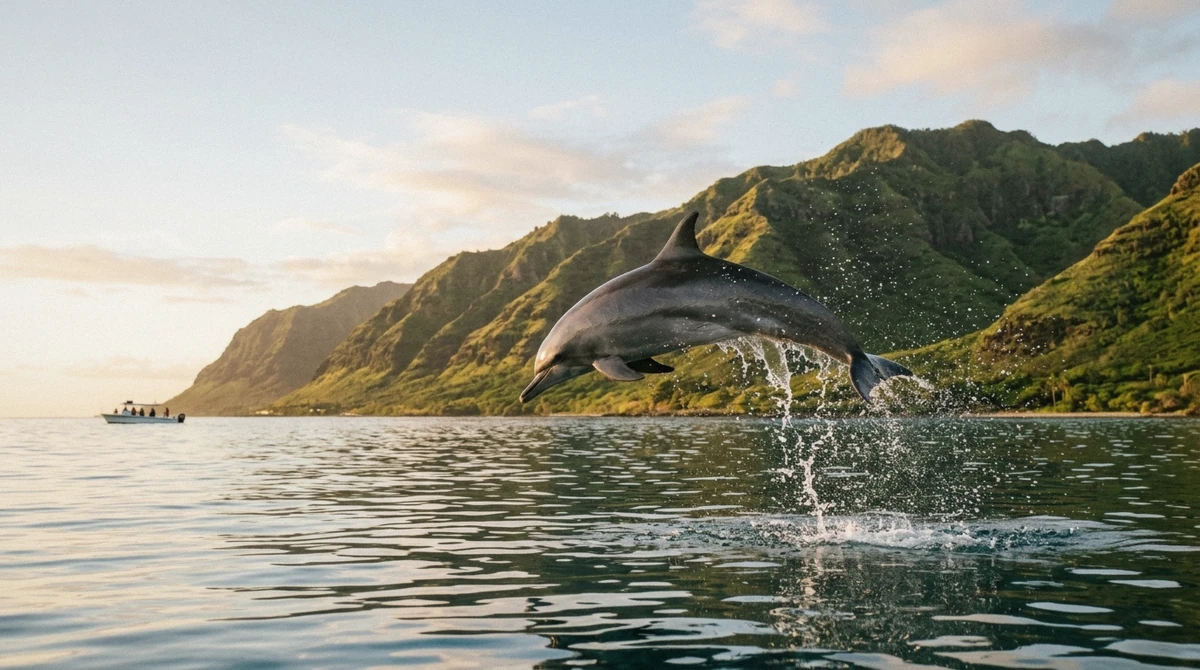
The best time to see dolphins in Oahu is technically any month, since resident spotted, bottlenose, and spinner pods work the Waianae coast year-round and there is no closed season. What actually changes by month is the water and the bonus wildlife: May through September brings the calmest seas and the fewest weather cancellations, while December through March adds migrating humpback whales to the same trip, at the cost of choppier conditions. Below is the month-by-month breakdown, the best time of day, and what really causes a trip to get cancelled.
Quick answer
There is no single best month to see dolphins in Oahu, since resident pods work the Waianae coast year-round. May through September brings the calmest seas and the fewest weather cancellations of the year, while December through March adds humpback whales to the same trip at no extra cost, though winter also carries the highest cancellation risk on record.
Key takeaways
- May through September brings the calmest seas and the most reliable sailings all year
- December through March trades some cancellation risk for a real shot at humpback whales on the same trip
- One boat's reviews recorded weather cancellations three times over in March 2026, more than any other month, though every operator refunds or rebooks in full
- It isn't rain that cancels these trips, it's wind and swell, which the physics section below explains
- Morning departures find the lightest wind and calmest water before afternoon trade winds build
- Which dolphin boat fits which traveller changes a little by season, mostly around the sunset slot and the whale bonus
The Short Answer
No dolphin season, but a real weather season
Dolphins in Oahu are not migratory in the way most people assume when they search for a "best season": spotted, bottlenose, and rough-toothed dolphins work these waters year-round, and resting spinner pods return to the same shallow bays every single day regardless of the calendar. What changes month to month is not whether dolphins show up, it's how comfortable the boat ride is and whether humpback whales are in town for free.
May through September is the safest bet for calm water and a reliable sailing. December through March is the trade-off window: choppier seas and the year's highest cancellation risk, in exchange for a genuine chance at humpback whales on the same trip that already includes dolphins.
Seasons at a Glance
How to read the verdict column
"Verdict" below is a quick read on sea conditions and what's in the water that month, not a claim about dolphin presence, which stays constant all year. Typical daytime highs for Honolulu are listed separately beneath.
| Month | Sea State | Wildlife | Verdict |
|---|---|---|---|
| January | Choppier, trade winds build | Dolphins, humpback whales | Good, whale bonus |
| February | Choppier | Dolphins, humpback whales peak | Good, peak whales |
| March | Choppiest, higher cancellation risk | Dolphins, humpback whales | Good but riskiest month |
| April | Improving, still variable | Dolphins, late-season whales | Decent, transitioning |
| May | Calm, most reliable begins | Dolphins year-round | Best overall |
| June | Calm | Dolphins year-round | Best overall |
| July | Calm, warm | Dolphins year-round | Best overall |
| August | Calm, warmest month | Dolphins year-round | Best overall |
| September | Calm, still reliable | Dolphins year-round | Best overall |
| October | Trade winds returning | Dolphins year-round | Good, transitioning |
| November | Choppier | Dolphins year-round | Good |
| December | Choppier, trade winds build | Dolphins, whales arriving | Good, whale season starts |
Typical Honolulu daytime highs
Honolulu's temperature swing is mild all year, so heat is never really the deciding factor for a dolphin trip; sea state is. August runs the warmest at a typical 32°C, and January and December both sit at a typical 27°C, the coolest months on the calendar.
| Month | Typical High |
|---|---|
| January | 27°C |
| February | 27°C |
| March | 28°C |
| April | 28°C |
| May | 29°C |
| June | 31°C |
| July | 31°C |
| August | 32°C |
| September | 31°C |
| October | 31°C |
| November | 29°C |
| December | 27°C |
Best Season by Traveler Type
If You want the calmest, most reliable ride
Book May through September, when trade winds are lightest and cancellations are least common all year
If You want a free whale sighting on top of dolphins
Book December through March, when humpback whales migrate through the same waters the boats already cover
If You get seasick easily and want to stack the odds
Choose a summer sailing over a winter one, and take medication before boarding either way
If You want a sunset trip
Book any month; Ocean Joy is the only boat with a dedicated sunset departure, and winter's earlier sunsets fall inside the trip window
If You have flexible dates and just want the safest bet against a cancelled morning
Pick a weekday in June through August, the calmest stretch of the calmest season
Calm Season (May to September): The Safest Bet
Flattest water of the year
May through September is when the Waianae crossing is at its most reliable: trade winds stay lightest, the water runs flattest, and this is the window operators point to when they talk about their fewest weather cancellations. Warmer daytime highs, up to a typical 32°C in August, make the exposed ride out more comfortable too.
- Sea state: calmest of the year, least seasickness risk
- Crowds: steady rather than spiking, no single week stands out as unusually busy
- Trade-off: no humpback whales during this window, dolphins only
- Booking lead time: a few days out is usually enough outside major holidays
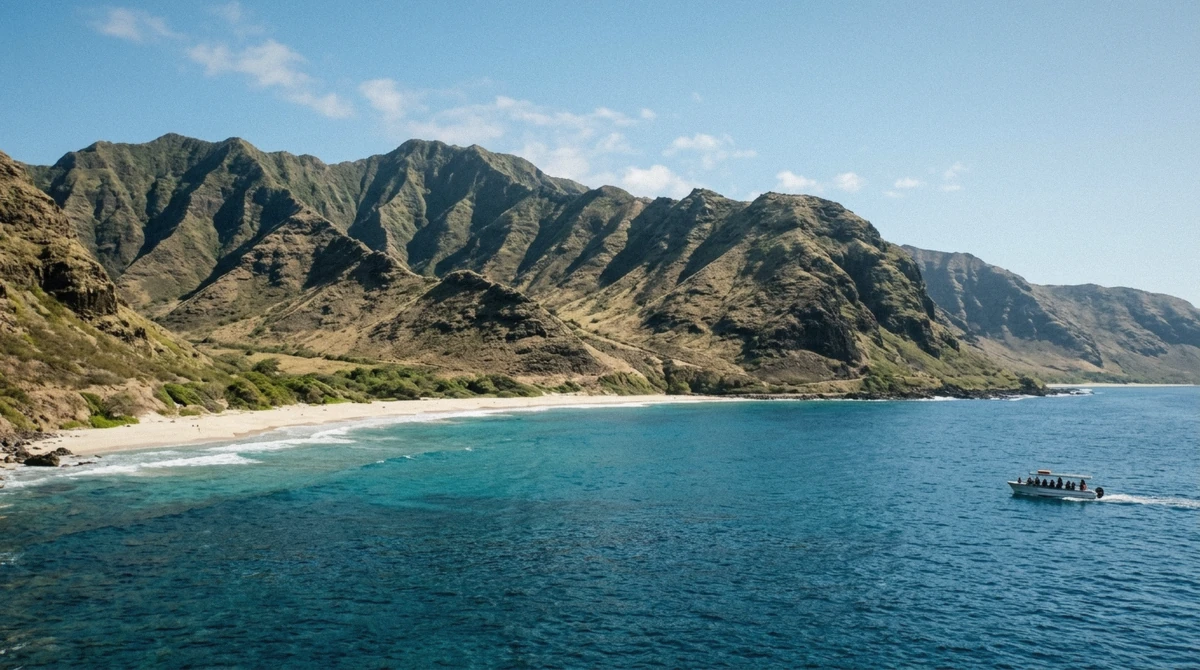
Summer trade-wind season: the west side at its flattest, and the fewest cancelled sailings.
Trade-Wind Season (October to April): Choppier, With a Bonus
Rougher water, and whales from December
October through April brings the trade winds back and with them a choppier ride, particularly from December through March, the window operator reviews flag most often for weather cancellations. The trade-off is real: this is also when humpback whales migrate through Hawaiian waters, so a dolphin trip in this window has a genuine shot at a whale sighting too, at no extra cost.
- Sea state: choppier, especially December through March
- Wildlife bonus: humpback whales migrate through roughly December through March
- Trade-off: highest weather-cancellation risk of the year falls in this window
- Booking lead time: book a few extra days of flexibility into a winter trip in case of a weather reschedule
Winter Whale Season (December to March)
The free bonus most visitors don't expect
Humpback whales migrate to Hawaiian waters roughly from December through March to calve, and any dolphin boat working the same coastline that season has a real chance of a whale sighting alongside its dolphins, at no extra charge. The Waianae swim tour covers this same stretch of coast during the peak of the migration, making it a natural pick for travelers chasing both animals on one trip. The trade-off, honestly stated, is that this is also the choppiest, most cancellation-prone stretch of the calendar, so build a spare morning into a winter itinerary if the schedule allows it.
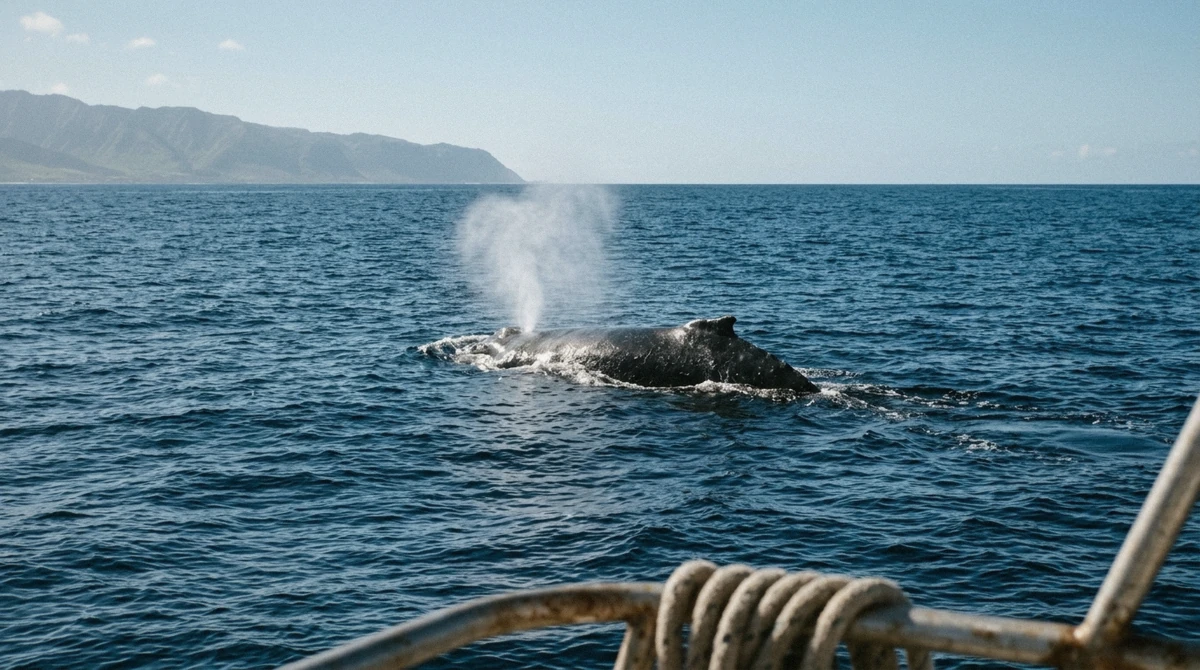
December through March, dolphin boats detour for blows on the horizon at no extra charge.
Morning vs. Afternoon
Morning wins, without much competition
Morning is the clear answer for every boat on this coast. Wind stays lightest and the water flattest in the early hours, before trade winds build through the day, which means a calmer crossing, less seasickness, and clearer turquoise light for spotting pods from the deck. The one exception on the schedule is the sunset slot, which trades calm water for golden light and works because it's a shorter, closer trip rather than because afternoon seas are actually better.
What Actually Affects Conditions
It's wind, not rain
Most visitors assume Oahu's weather risk is rain, the way it works in a rainforest destination. It isn't. What actually cancels or roughens a dolphin trip here is wind and the swell it builds, which is why a sunny but breezy afternoon can be a worse ride than an overcast, still morning. Trade winds build predictably through the day and strengthen seasonally from roughly October through April, which is the real mechanism behind both the morning-over-afternoon rule and the calm-season-over-winter rule above.
The dolphins themselves aren't driven by season at all. Resting spinner pods return to the same shallow west-coast bays every single day after feeding offshore overnight, a daily rhythm rather than a monthly one, which is exactly why watching from a boat or from shore works just as well in February as it does in July. Our species guide covers that daily rhythm and the 50-yard rule that protects it in more depth.
Weather Cancellations and Rebooking
What actually happens if the weather turns
A choppier morning doesn't automatically mean a cancelled trip; it usually just means a rougher ride and more seasickness. Real cancellations, the kind that keep the boat at the dock, tend to cluster in the winter trade-wind window: one family's Ocean Joy trip was cancelled for weather three times over in March 2026 before it finally ran. When an operator cancels for weather, every boat on this page refunds or rebooks in full at no cost to the traveler.
Building a spare morning into a winter trip, rather than scheduling a dolphin tour on your one available day, is the simplest way to avoid the trip being the thing that falls through.
Book the first free morning, not the last
The single best hedge against a cancelled sailing costs nothing: put the boat on the first open morning of your stay instead of saving it for the send-off. Operator cancellations refund or rebook in full on every trip we compare, so the money is never at risk, but a rebooking only helps if you still have mornings left. Travellers who lost their trip in the March 2026 cancellation run were the ones who had parked it on their final day.
Which Boat by Season or Time Slot
Matching the boat to the window
For the winter whale bonus, the Dolphin Excursions swim tour covers the Waianae coast right through peak migration and backs its dolphin sightings with a written guarantee, useful insurance on the choppier months. For a sunset trip in any season, Ocean Joy's luxury cruise is the only boat on this coast with a dedicated evening departure, and it pairs especially well with winter's earlier sunsets. Outside of those two cases, boat choice matters less by season than by the swim-or-watch choice itself; our full cost comparison breaks down that choice by price.
Questions About the Best Time to See Dolphins in Oahu
Do dolphin sightings in Oahu change with the season?
Not by month. Spotted, bottlenose, and spinner dolphins are year-round residents of Hawaiian waters, not seasonal visitors, so there is no single dolphin month the way there is for migrating humpback whales.
What is the best time of day to see dolphins in Oahu?
Morning, without much competition. Wind and swell both build through the day, so early departures get the calmest crossing and the clearest light for spotting pods from the boat.
Where is the best place to see dolphins on Oahu?
The Waianae coast on the west side, where resting spinner pods and feeding spotted and bottlenose dolphins are most consistently found, and where most of the boats we compare depart from.
Is winter a good time for a dolphin tour in Oahu?
Yes, with a real trade-off. December through March adds humpback whales to the same trip, but it's also the choppiest, most cancellation-prone stretch of the year, so build in schedule flexibility if you travel then.
How far in advance should I book a winter dolphin tour?
A few extra days of flexibility beyond what you'd build into a summer trip, given how often winter weather pushes a sailing back a day. Every boat offers free cancellation up to 24 hours out either way.
Are dolphins more active at a certain time of year?
Not by month. Their activity follows a daily rhythm, resting inshore by day after feeding offshore overnight, rather than a seasonal one, which is why the time of day matters far more here than the time of year.
Booking a dolphin tour in Oahu comes down to which trade-off suits the trip: May through September for the calmest ride available all year, or December through March for the same dolphins plus a real shot at humpback whales, accepting a choppier crossing and a higher chance of a weather reschedule along the way.